

“When you are avoiding your pain, you are really only avoiding your growth.” ~Bryant McGill
Spiritual bypassing: ~n.~ the use of spiritual practices, beliefs, or ideas to avoid uncomfortable emotions or unresolved wounds
Perched on the window seat in my son’s bedroom, my mind spun with possible solutions for how to make him feel better. He was in tears, struggling.
My son had just shared with me that he felt like he had no friends. The kids at school never included him or sometimes made fun of him. He watched other children laughing together, being invited to sleepovers, while he was left out.
It was affecting him so much that he was starting to isolate and develop signs of depression. I noticed him losing his zest for life.
My response?
“Everything is going to be okay, honey. We just need to get you outside or go do something to take your mind off things for a little while,” I told him encouragingly.
“Maybe we could go to the park or the zoo? Or go look at animals at the humane society?”
My son stared back at me with disinterest. Not just disinterest—disappointment.
I was doing it again:
Fixing instead of supporting.
Jumping to solutions instead of holding space.
Avoiding instead of truly listening.
I can only imagine how invisible he felt.
Looking back now, I wished I had shown up for him differently.
Rather than feeling my love and presence, my actions were communicating to him that it wasn’t okay to feel sad. That he just needed to fix it.
Although my intentions were good, my response sent the message: your pain is not welcome here.
By trying to ease his pain, I was really trying to ease my own.
If he was sad, then I was sad. If he cried, I cried.
I felt helpless watching him suffer, and I didn’t know how to sit with that helplessness without trying to escape it. I had never learned how.
Seeing him like that broke my heart. I wanted him to be happy. I wanted to show him I cared.
I mistakenly thought the correct response as his mom was to do something about it—to make his pain go away, rather than to sit with him in the dark.
But I couldn’t have been more wrong.

Little did I know that I was spiritually bypassing these very real and necessary emotions—hoping, praying, that neither of us would have to feel their weight.
Instead of providing comfort and support, I was using toxic positivity to move him out of his sadness instead of meeting him in it.
I was teaching him that certain emotions weren’t okay to feel.
It wasn’t until years later, while undergoing intensive trauma therapy, that I discovered the root cause of this coping mechanism—a childhood that taught me that difficult emotions were problems to solve, not experiences to be felt.
Early on, I was forced to play the role of my parent’s emotional support system. My needs became invisible and secondary. I learned that if my caregiver was struggling, then I was not safe. Her emotional stability and well being directly impacted my own.
As a result, I developed the survival strategy of codependently putting others’ needs ahead of my own, while pushing my feelings down—especially the negative ones.
I learned to be the peacekeeper, the uplifter, the consoler.
I learned to pretend that I was okay.
I turned positivity and hard work into my shield. If I could stay busy, lighthearted, and put together on the outside, I wouldn’t have to face the uncomfortable emotions buried deep within.
But that strategy only got me so far.
In that moment, looking into my son’s teary eyes, I could see that no amount of positivity or distraction was going to fix the underlying issue—no matter how hard I tried.
No. Instead, the pain had to be felt. And that scared me.

I would give anything to go back to that moment and respond differently.
To hold my son’s feelings with grace.
But I can’t.
I can only use it as a teachable moment to help me show up for my son better going forward.
One of the most important realizations I’ve come to on my healing journey is this:
Once we know better, we must do better.
And I am ever grateful for coming to this awareness.
I’d like to share what I’ve learned the hard way, about spiritual bypassing, to help you become more informed and to recognize it when it happens so that you can hopefully avoid this common pitfall.
Common Signs of Spiritual Bypassing
First, let’s begin with some identifiable signs that you may be using spirituality to bypass difficult emotions or experiences.
Here are a few:
- Unrealistic optimism
- Exaggerated positivity
- Repression of negative emotions
- Intellectualization of how you feel
- Ignoring your feelings by turning your attention toward spirituality
- “Trying to manifest” in the midst of difficult life circumstances
- Feeling shame when you have human reactions
- Pretending everything is okay when it’s not
- Seeking a constant high through spiritual experiences
These are just a few examples. Ring a bell?
If you’ve ever caught yourself doing these things, you’re not alone. Many of us have.
But if we understand WHY we respond to discomfort this way, it can help us learn to sit with our pain and respond in healthier ways going forward.

Why We Spiritually Bypass
Let’s discuss next why we spiritually bypass in the first place.
Like any emotional wound you’re trying to heal, understanding the root cause is the first step toward recovery. More often than not, that root traces back to childhood—a wound or a rupture that led us to develop certain coping mechanisms or behavioral patterns.
Finding the root helps you close the loop.
Spiritual bypassing is, essentially, a defense mechanism. It is our way of protecting ourselves from feeling pain and discomfort.
It is similar to what the field of psychology calls “disassociation.”
When an event or situation feels too overwhelming, painful, or difficult, we shut down or close off parts of ourselves to create safety.
Even the most well-intentioned people are guilty of this—including those who are spiritually aware.
It’s normal to feel confused after the exhilaration of the initial stage of awakening wears off, and we are met with the unpleasant reality of what comes next: healing everything that came before.
This is where the real work begins—and also where we are most tempted to avoid the deep-seated wounds we’ve buried.
As we awaken, what was once hidden in the dark is suddenly brought into the light—things we may not have wanted to feel, remember, or weren’t ready to face.
Stage two of awakening brings everything to the surface.
The good.
The bad.
The ugly.
Our consciousness is expanding, but we haven’t yet learned how to navigate the very real, everyday challenges that begin to arise:
Identity crisis.
Relationship friction.
Job dissatisfaction.
Family dysfunction.
We are hit with one trigger after another, tossing us into a tailspin.
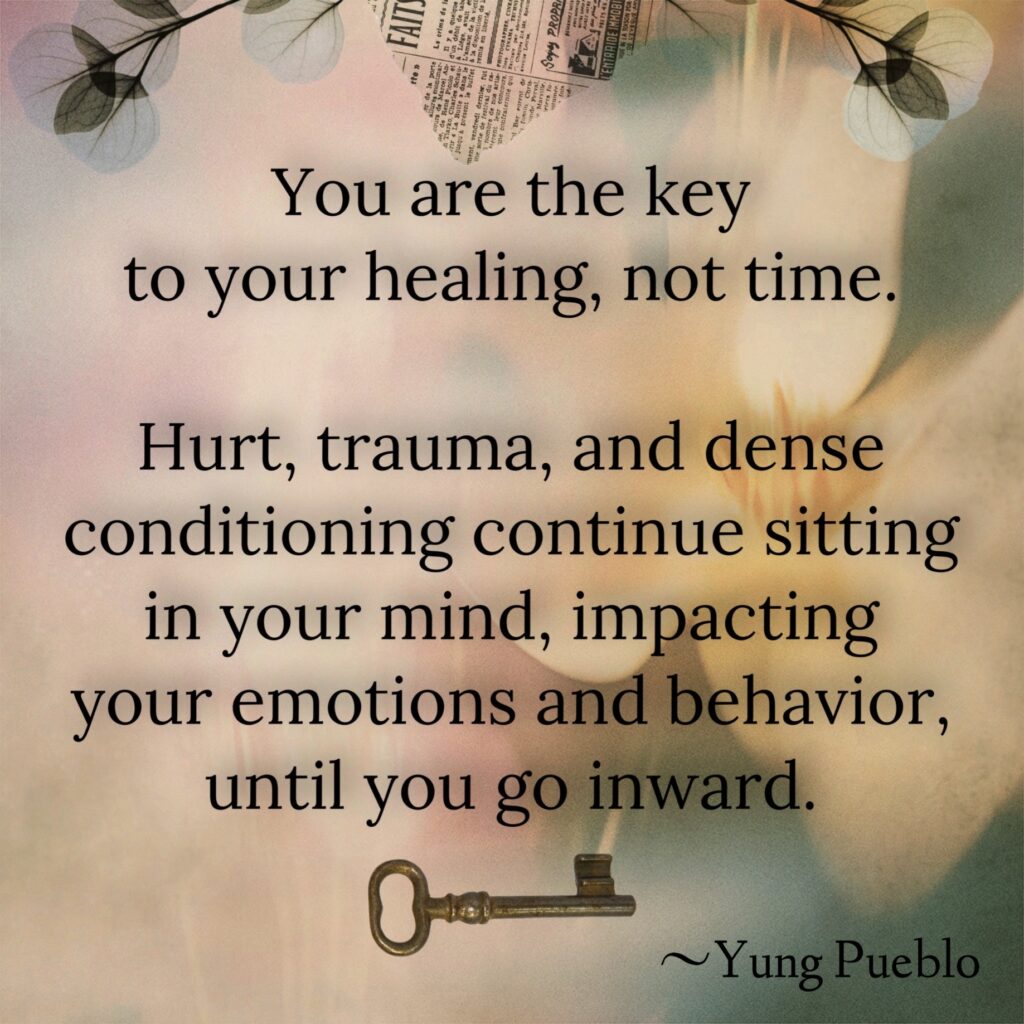
And, because we have started learning about spirituality—about manifestation, energy, vibration—we think the answer to our struggles is more positivity, more spiritual practices, or more avoidance.
We buy into misleading teachings of manifestation that urge us to “keep our vibration high” and avoid negative emotions altogether.
We are led to believe that being “enlightened” means existing in a constant state of peace and bliss—and that if we allow ourselves even a moment of sadness, anger, or heaviness, it means we are failing or slipping back into old patterns.
And, in our defense, it’s no wonder we think this way.
So much of what is spread in the spiritual community preaches these ideas.
Without grounded support and discernment, we naively allow ourselves to believe that pain is something to be avoided or minimized—that negative emotions are inherently bad, and that moving through challenging human experiences is a sign of failure.
But, if you’ve survived stage two of your awakening and you’re reading this now, chances are you’ve come to understand just how limiting—and ultimately harmful—this mindset can be.
Why Bypassing Creates More Suffering, Not Less
The real danger of spiritual bypassing lies in its ability to keep us disconnected from ourselves—trapped in cycles we never truly heal.
Rather than alleviating our pain as we hope it will, this defense mechanism actually has the opposite effect—compounding it.
When we don’t learn how to process difficult emotions and move through discomfort in a healthy manner, we hold ourselves back in multiple ways.
We slow down our growth and our progress by delaying the inevitable. Pushing our feelings down, running from them, or refusing to face the truth prolongs our suffering. And here’s why:
Our emotions—and the underlying wounds that caused them—don’t simply disappear because we ignore them. They get stored in our nervous system and in our bodies, quietly festering and creating emotional and energetic blockages.
Over time, this manifests as chronic, often unrecognized stress—showing up as anxiety, restlessness, and inner turmoil—which, if left unchecked, compounds over time.
This stress can bleed out into other areas of our lives—our relationships, our physical health, our mental health—intensifying our discomfort and ultimately holding us back from experiencing the peace we desire.
The goal in life is not to avoid pain, but to build enough resilience and inner safety that we no longer feel the need to run from it.
When we deny ourselves permission to feel difficult emotions—to be human, to be messy—we engage in a subtle but powerful form of self-abandonment. Unknowingly, we are dividing ourselves into fragments.
It’s as if we are telling ourselves, “I’ll accept and embrace the lighter, more pleasant parts of who I am—but not the darker, more uncomfortable ones.”
By choosing to reject our shadow side, we don’t heal it—we disown it. And in doing so, we create more inner conflict, not less.
But when we courageously face difficult moments head-on—when we allow ourselves to feel without judgment, to move through the messiness—we strengthen our resilience, deepen our self-confidence, and expand our capacity to endure future challenges.
The solution?
To stop using spirituality as a way to disconnect from our feelings.
To stop trying to rescue others—and ourselves—from pain, believing it is something to be feared or avoided.
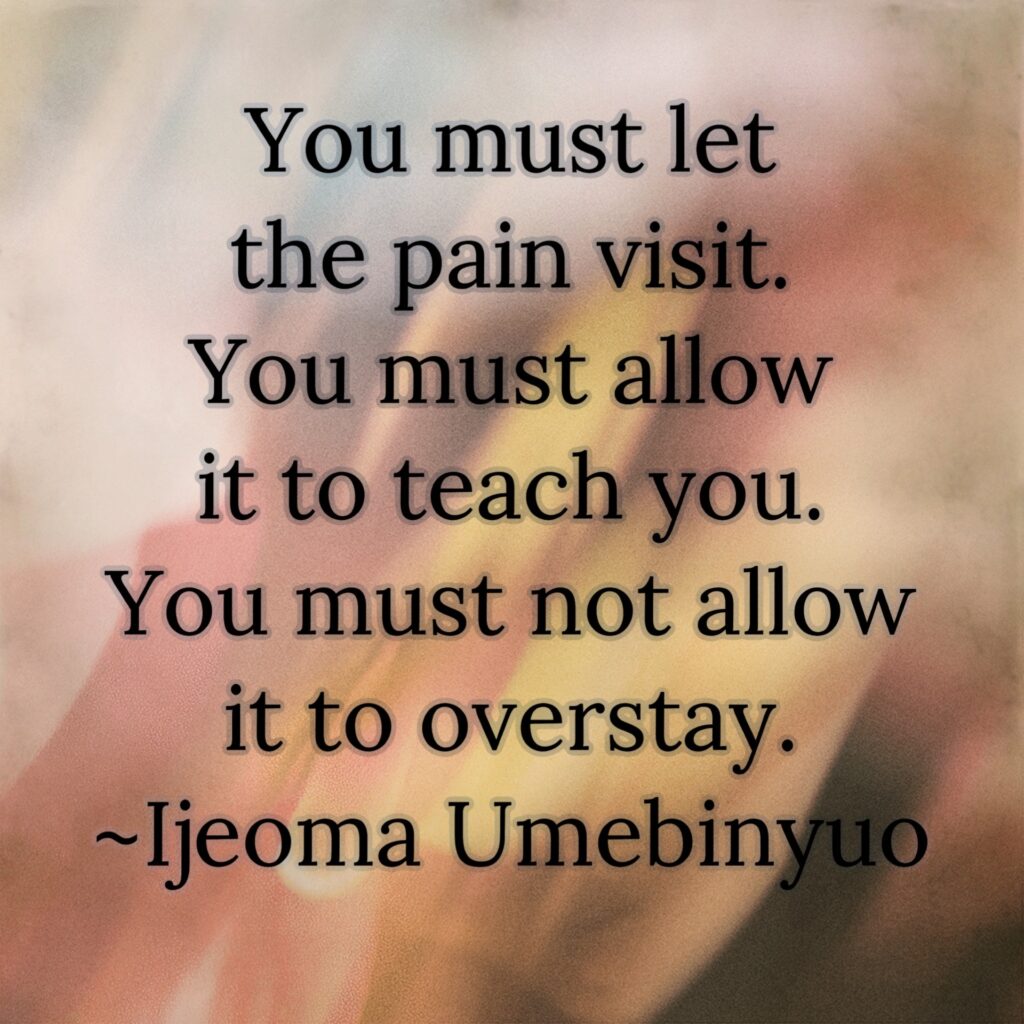
It is through the pain that we grow. It is through our acceptance of all parts of the human experience that we heal, expand, and become whole.
Although it feels uncomfortable, raw, and scary to sit with our shadows, moving through the dark is what ultimately leads us to the light. As Rumi once wrote, “The wound is the place where the light enters in.”
Your pain is your teacher, if you choose to see it that way.
Each and every trial you face is shaping you—softening you, strengthening you, awakening parts of you that may have otherwise remained hidden.
Remember this: you are an incredibly resilient, courageous human being with the capacity to endure difficult things.
You are someone because you come from “The One.” The power and wisdom of the entire Universe lives inside you—the same force that allows you to rise and to begin again.
And this pain you’re facing?
It did not come to break you—it came to transform you.
To teach you just how strong you can be.
To gift you with superpowers you didn’t even know you had:
Increased empathy.
Fearlessness.
Depth.
It will give you the ability to relate to others in a way that only lived experience allows.
Your pain and everything you lived through serves a greater purpose—showing others the incredible strength of the human spirit.
Thank you for your courage to face what once would have broken you.
Sending you so much love. ♥
© 2026 Divine Soul Guidance
If you desire more guidance and support with this topic, or another challenge in your awakening journey, I would be honored to work with you. Follow the link on the Contact Me page to get started.
References:
- On Spiritual Bypass and Relationship
- Spiritual Bypassing as a Defense Mechanism
- What is Spiritual Bypassing?
- What is Spiritual Bypassing & How to Stop Doing it
 orker, and spiritual mentor who guides others on their awakening journey to heal from unhealthy patterns and behaviors, free themselves from the past, and step into becoming their most authentic, aligned selves. She is the author of Bravely Becoming © 2021 and the course creator of Soul Awakened, a step-by-step guide to navigating the awakening process.