

“To let go does not mean to get rid of. To let go means to let be. When we let be with compassion, things come and go on their own.” ~Jack Kornfield
There is much pressure in our society today to form partnerships, unions, and marriages for all the wrong reasons. Status. Familial expectations. Children. Financial security. Tax benefits. Comfort. Convenience. External markers of a person’s worth or success. And more.
Sometimes this pressure leads us into long-term relationships or commitments that were never aligned to begin with or to stay in these relationships past the point of mutual growth and fulfillment.
We stay because it’s comfortable. We stay because it gives us a sense of belonging. We stay because starting over is scary… because we fear judgment… because we have been trained to think ending a relationship is a failure.
The list goes on.
Sadly, we are never taught when it is time to leave. Rather, we are not taught that leaving or letting go of a relationship can sometimes be the more compassionate thing to do.
If you have ever had to walk away from someone you still loved, then you know this truth. You know the excruciating feeling you get when you realize that staying together is only causing you both pain, holding you back, or keeping you tied to a version of yourself that no longer exists.
Your love for this person has not disappeared, but something has changed. You feel it.
Despite the love and memories you’ve shared, your gut tells you the relationship or contract has run its course. There’s an unspoken sense of closure or finality: a chapter coming to an end.
I remember feeling this… first in my marriage and later in other romantic connections. I even felt this way with family members and friends, too.
Each time these long-term connections ruptured, I experienced a sense of disbelief. Of shock and uncertainty. Like I was making a mistake. I saw the signs, but I refused to accept what my intuition was telling me.
How could someone I’ve known so long and shared such intimate moments with suddenly exit my life?
How could the deep bond and affection we felt not be enough to hold us together?
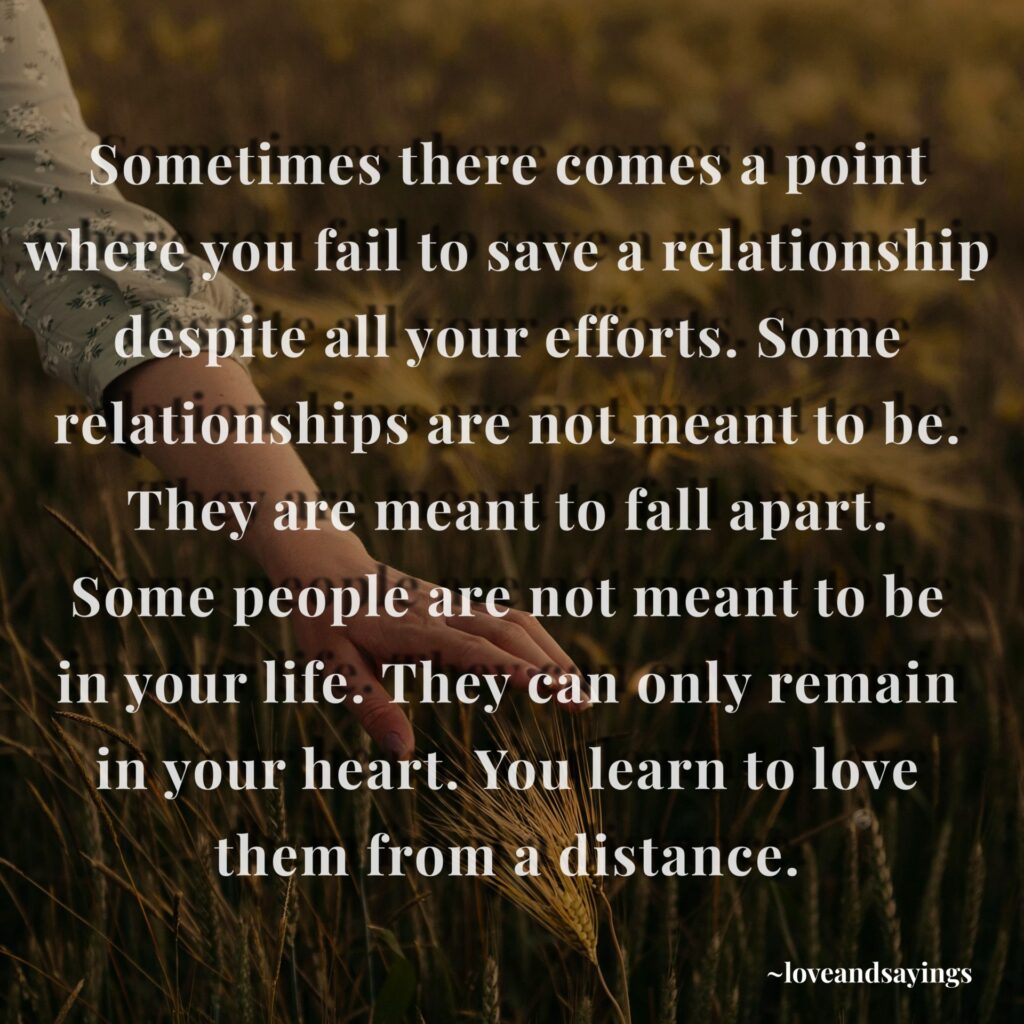
Numerous times, I fought to salvage relationships, to seek reconciliation, to work through misunderstandings. I tried to build bridges. I searched for solutions, hoping somehow, some way the connection could be repaired and heartbreak avoided.
I exhausted myself trying to force pieces back together that no longer fit, only to realize that what was falling apart was not meant to remain intact. It was meant to be released.
My refusal to accept this fact was not only inviting more discomfort, but also prolonging the inevitable. The fear of losing people I loved, leaving things unresolved, and failing caused me to stay stuck. I remained tied to people and things that were either harming me, stunting my growth, or not providing the type of love and support I needed.
Over time, the levy broke. The discomfort of trying to hold on became unbearable. I reached a point where I could no longer keep forcing the pieces together. I had to surrender to the unraveling of things in my life – relationships, plans, dreams – and TRUST that their disintegration held a deeper purpose.
Whenever something ends, something new begins.
Developing spiritually and personally reminds us of the importance of allowing events to unfold naturally, without trying to force or control anything. We must let people enter and exit our lives without holding on too tightly.
If someone or something falls away, it is because they are meant to.
Some souls only stay in our lives for a season, to teach us certain lessons. They push us to grow, fulfill their purpose, and then move on. This does not signify failure. This signifies growth.
The assignment is complete, so the relationship dissolves. All we need to do is to accept and allow it.

When a Soul Tie No Longer Serves
After learning these truths through experience, let me share some valuable insights that might help you going forward, beginning first with a few indicators that the soul tie you’re in has reached its end.
Here’s a quick relationship checklist you can use to self-assess. Are you experiencing…?
☐ Misalignment: your values, interests, and lifestyles contradict one another
☐ Lack of reciprocity: the relationship is imbalanced; one person gives more than the other
☐ Energetic drain: the relationship is wearing you down emotionally, mentally, and physically
☐ Disconnection: there is a lack of intimacy and connection; you’ve grown apart; conversations feel superficial
☐ Stagnancy: there is no more growth in the connection; it no longer stimulates you mentally or spiritually
☐ Unmet needs: you feel resentful, frustrated, or hurt because your needs are ignored or dismissed
☐ Lack of repair and accountability: conflicts are left unresolved; patterns repeat; problems are not adequately addressed
☐ Unhealthy dynamics: disrespect, codependency, unhealthy attachments, betrayals, verbal or emotional abuse, addictions
☐ Violated boundaries: your boundaries or non-negotiables are continuously violated or disrespected, creating a lack of safety
If you’ve answered yes to any of these, then it may be time to release.

6 Action Steps to Release Someone You Love
Once you have recognized that a soul connection is detrimental, the next step is to let it go. As you are aware, this is easier said than done. We may know it is time to release someone we love, yet hesitate to act.
There are many factors at play here. Sometimes we are not ready to let go. We want to wait for the right timing. We want to soften the blow. We want to try all possible solutions before throwing in the towel.
Other times, separation is logistically complicated, requiring details to be sorted out and gradual steps to be taken. This is especially true if our lives are deeply intertwined with another.
Letting go, decoupling, unfriending… none of these experiences are ever easy.
We can minimize the damage, however, by releasing the connection with as much compassion and integrity as possible. Continue reading for some suggestions on how you might go about this.
1. Be Honest & Direct About Your Needs
First, tell the other person honestly and directly how you feel and what you need, whether that is more presence, more consistency, more transparency. Your needs are not up for negotiation and they should not be downplayed.
Staying quiet just to preserve the peace will only cause you inner turmoil and lead to later conflict. It will not help the other person see where changes are required and it will not help salvage the relationship. Being up front and honest is the kindest thing you can do. It shows the other person you value the relationship enough to work on solutions together.
If someone truly values you, they will work to meet your needs. They will listen to your concerns. They will bend, adapt, and change their behavior to preserve the relationship.
If they can’t, or if they show you they aren’t willing, then you must let them go so you can make space for someone who can. You deserve to feel safe, valued, respected, and supported.
2. Share Your Observations & Facts
Second, when addressing your needs or boundary violations, avoid criticizing or overly focusing on the other person’s shortcomings, and instead focus on your observations, experiences, and feelings. Focus on the facts.
I am observing this…
I noticed this…
I experienced this…
I felt hurt by…
I felt disrespected by…
Some may disagree, but how you feel is a fact. It is not up for debate. If someone lets you down or betrays you, you will justifiably feel a certain way. Stating how a person’s actions have hurt you IS factual information. Your feelings are valid and deserve to be heard, just as much as the actions or behaviors that caused them.
You should, of course, do your best to speak calmly, addressing the behavior rather than the person’s character. Someone who genuinely loves and cares about you will care how their actions impacted you. They will want to work to repair the damage.

3. Create Space or Go No Contact
After voicing your needs and concerns, watch how the person responds. Do they demonstrate care for your feelings? Do they take responsibility for their part in the problem? Are they working to make improvements? Have they presented you with action steps?
Or, do they shut down and react defensively? Do they explode in anger and try to justify their behavior? Do they invalidate or dismiss your feelings and observations?
Their response will tell you everything you need to know. If someone is not able to maturely address your needs and concerns and work towards repair, then it is time to let that person go. You cannot build a healthy relationship with someone who avoids accountability.
In this situation, it may be wise to create physical or energetic space in order to safeguard your mental and emotional well being. Implementing a period of no contact may also be beneficial. This measure diffuses intense emotions, redirects your energy toward your own healing, and allows both parties space to reflect and see things in a new light.
4. Pull Back Your Energy
Next, when you’re noticing that a relationship is one-sided, or when it seems that you are more invested than the other person, pull back your energy. Don’t pour more time and energy into a person or a relationship that is giving you little in return.
Instead, notice the effort that person is putting in and match it. Are they doing thoughtful things for you? Are they listening and providing emotional support? Do they show up for you when you’re struggling? If the answer is no, then respond accordingly.
Stop giving where your time, energy, or support is not reciprocated. Stop carrying the weight of the relationship. Stop going out of your way for people who don’t go out of their way for you. Instead, only give what feels like an equal exchange or what feels fair to you.
You deserve to be surrounded with people who can meet you fully and who are equally invested.

5. Detach & Redirect Your Thoughts
Another strategy to help you release someone you love is to practice energetic and emotional detachment. This does not mean that you have to be cold or harsh; it means that you withdraw the energy and emotional investment you were giving to the relationship and you redirect it back to yourself.
When we are over-consumed with another person’s behavior or with the problem, we tend to overlook our own emotional well being and needs. You can find yourself replaying hurtful events and overthinking to the point where it is unhealthy, preventing you from caring for yourself and concentrating on your own needs.
Redirecting your thoughts towards healthier and more constructive topics provides both you and the other individual an opportunity to take care of yourselves.
6. Perform a Cord Cutting Ceremony
Finally, one last strategy I would recommend whenever ending a long-term relationship is to perform a cord cutting ceremony.
Energetic ties naturally remain intact when two people have exchanged emotional or physical energy over a period of time. Being in someone else’s energy leaves an imprint on your own energetic body, either positive or negative. This includes friendships, family relationships, and romantic partnerships.
Therefore, it is not enough to simply refrain from seeing or talking to a person. You must sever the ties that bind you, call back your energy, and release your attachment.
This is not a cruel or unkind practice. This is the practice of self-love and love for another.
If we remain connected to someone that is no longer healthy for us, or with whom we are no longer aligned, their energy will continue to pull on our life force. Their emotions will continue to circle in our energetic field, influencing our vibration and distracting us from our own healing.
When we cut cords with someone, we free both ourselves and the other person from attachments, enabling each party to move on more easily.
Below you will find an example of a cord cutting meditation you can try if you are curious:
Why Holding On Can Be a Disservice
Even if your connection with someone wasn’t unhealthy, it is still important to perform one or more of the steps above. Holding on to connections that have run their course not only delays your growth, but it delays the other person’s growth as well.
True understanding of a relationship’s lessons often comes only after we have walked away and given ourselves time and space for reflection. It serves neither person to keep investing in something that has reached its end. This only leaves the door open to repeated patterns and hurt and slower integration of lessons.
For true growth to happen, each person must grant the other the freedom to go on their own journey. The hope is that each person will carry forward what they’ve learned, allowing for greater self-awareness and more integrity in future relationships.
As the saying goes, “If you love something, set it free. If it comes back, it’s yours. If not, it was never meant to be.” (~famous proverb)
The reminders shared here are especially important at this moment in time. We are entering the Year of the Horse, which is fast-moving energy that rips away anything that is no longer aligned or is weighing us down: identities, belief systems, jobs, relationships. Let them go.
Loosen your grip.
Set them free.
Trust that the people you love will find their way.
Even if that means you are no longer holding their hand.
Sending you much love.♥
© 2026 Divine Soul Guidance
If you desire more guidance and support with this topic, or another challenge in your awakening journey, I would be honored to work with you. Follow the link on the Contact Me page to get started.
Recommended Resources:
 orker, and spiritual mentor who guides others on their awakening journey to heal from unhealthy patterns and behaviors, free themselves from the past, and step into becoming their most authentic, aligned selves. She is the author of Bravely Becoming © 2021 and the course creator of Soul Awakened, a step-by-step guide to navigating the awakening process.